HOME / Table of Contents = Civilizations - Cultures - Areas - Regions - Prehistory
Other Archaeological Sites / The Neolithic of the Levant (500 Page Book Online)
PreHistoric Beidha
Selected Excerpts on Beidha
The Neolithic of the Levant (1978) A.M.T. Moore (Oxford University)
Chapter 3: Neolithic 1 Beidha (Pages 109-113)
Chapter 4: Neolithic 2 Beidha (Pages 243-256)
Pre-History and Archaeology Glossary


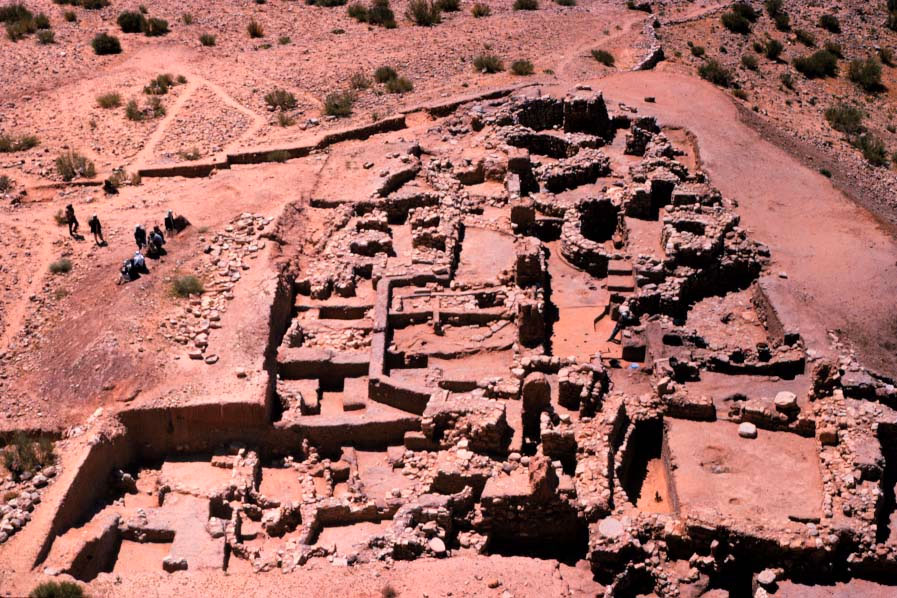
 A Natufian and Aceramic Neolitihic site near Petra in southern Jordan. It was first occupied for a short period as a semi-permanent camp in the Early Natufian Period. The community of this time lived off ibex and goat; 75 per cent of the goats were immature animals -- suggesting that selective hunting or perhaps herding was practised. Beidha was reoccupied circa 7000 BC by a PrePottery Neolithic A [PPNA] group who lived in a planned village of roughly circular semi-subterranean houses arranged in clusters. The main meat food came from domesticated goats while the villagers also cultivated emmer wheat and barley -- both still in an early stage of domestication -- and collected a number of wild plants ...
In the succeeding PPNB phase there was little change in the subsistence economy but the form of the buildings changed: in this stage there were complexes of large rectangular rooms each with small workshops attached. Floors and walls were plastered. There is some evidence that there may have been upper storeys. Burials without skulls were found in the settlement and there was also a separate ritual area away from the village where three apparently ritual buildings have been excavated. Finds from the site include materials that had come from great distances including obsidian from Anatolia and cowries and mother-of-pearl from the Red Sea ... (AHSFC).
The History of the Ancient Near East Electronic Compendium


